Re:Europe in Berlin – Final Stop of the Touring Summer School 2025
The Touring Summer School “Re:Europe – Rethinking Europe Together” brought together 31 students from Bulgaria, North Macedonia, France and Germany in 2025. Across four stations – Skopje/Prishtina, Sofia, Paris/Dijon and Berlin – the group engaged with Europe’s conflicts, political orders and future challenges. The overall project was funded by the Franco-German Youth Office (FGYO/DFJW/OFAJ), which enabled a multinational, academically grounded and dialogue-oriented exchange.
Overall Concept: Rethinking Europe “on tour”
The Summer School was designed as a touring format: each station focused on a specific theme – from post-conflict societies and EU enlargement to democratisation, memory politics and media freedom.
At the core of the concept was the combination of:
-
Expert inputs from academia, politics and civil society
-
On-site visits to institutions
-
Interactive formats such as workshops, city walks and group work
This created a learning space where national experiences, personal perspectives and social science analysis directly interacted.
The Berlin Module: Concentrating the European Debates
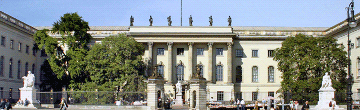
In Berlin, the Touring Summer School reached its final and most condensed stage. At the Humboldt-Universität zu Berlin, participants discussed:
-
EU enlargement and the rule of law, in particular judicial independence
-
the role of media and public spheres in reconciliation processes
-
current challenges in the Western Balkans and the “Berlin Process”
Meetings in the German Bundestag and at the Federal Foreign Office offered insights into German and European EU policy from an insider perspective and allowed participants to directly question political decision-makers.
Berlin as a Landscape of Memory and Conflict
Berlin was also explored as a landscape of memory: visits to the House of the Wannsee Conference, the Documentation Centre for Displacement, Expulsion, Reconciliation and key memorial sites linked historical responsibility to current debates on war, displacement, antisemitism and racism.
A discussion with Reporters Without Borders on press freedom in Europe and the Western Balkans highlighted democratic standards and the erosion of independent media – issues many participants know first-hand from their home countries.
Outcome: A Network for Europe’s Future
In the final reflection session in Berlin, the students brought together experiences from all four stations, developed joint project ideas and consolidated a transnational network.
The Touring Summer School “Re:Europe – Rethinking Europe Together”, made possible by the Franco-German Youth Office, demonstrated how young Europeans can openly address conflicts, think politically, and at the same time build trust and cooperation for Europe’s future.